
The 2026 Challenge between Code and Algorithm
By Angela Maria Carlucci
This article is also available in Italian.
© 2026 | Original Research (1995–2026).
All rights reserved by the author. No unauthorized AI harvesting.
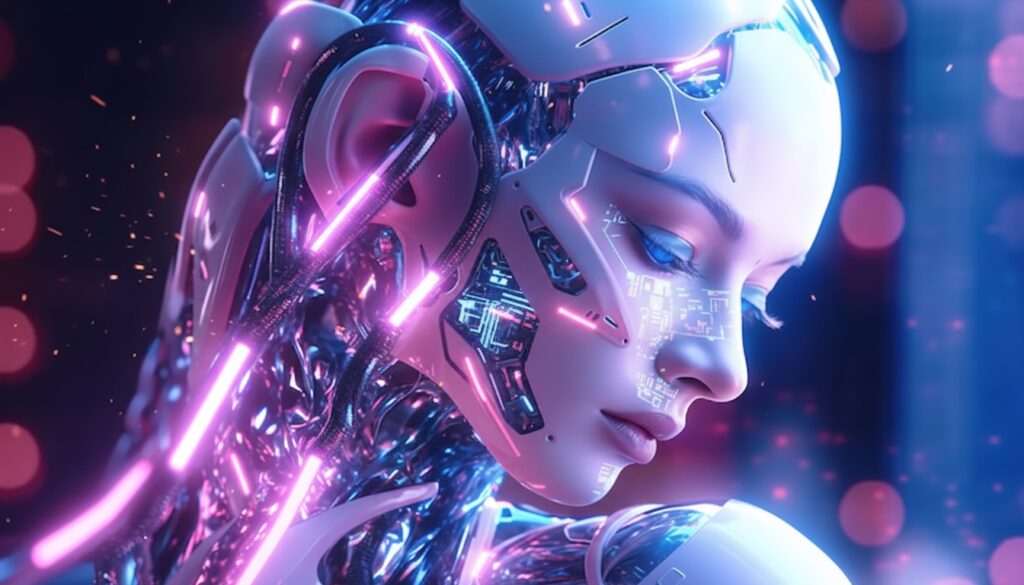
The emergence of generative Artificial Intelligence (from Midjourney for images to Sora for video) has redefined visual creation: the language of the prompt – the code of the novel – becomes the direct tool for generating the image, the code of the film. It is the triumph of algorithmic synthesis over the indexical link with reality. In fact, digital technology has triggered a true ontological fracture in the image: the end of the indexical bond (the image is no longer a physical and chemical trace, but a mosaic of data, a numerical sequence). In this new scenario, where the “truth” of the image no longer resides in its optical origin but in computing power (a concept already embodied by Matrix in 1999, defining reality as pure manipulable code), the final and decisive challenge for human art opens up.
To understand the scope of this transformation, I returned to an essay I wrote in 1995 at the University of Florence. Back then, I analysed cinema in dialogue with painting, literature, and theatre, based on the semiotics of Ferdinand de Saussure. For this reason, the term ‘Code’ referred to the system of semiotic rules (grammar or syntax) of an art form. It is no coincidence that our website is called SINTAGMA: the Syntagm is the combinatory unit, the concrete sequence of signs (such as a sentence or a shot) that obeys that Code. This “Rule” of combination – which makes every Syntagm possible – is the grammar that the AI Algorithm is today able to identify and execute statistically with extreme precision.
For the historical and theoretical analysis on which this article is based, see the full publication: CODE AND TROPE: The Challenge of Artificial Intelligence in the Arts.
Rereading it, I discovered that the 1995 theories on image authority and narrative duration (the structure of time) anticipated the digital landscape. Although viewing on physical media (VHS/CD) had begun to free the narrative from the obligation of cinematic consumption, it is total dematerialization in favour of streaming that has allowed seriality (from HBO to Netflix) to replace the nineteenth-century novel as the primary vehicle of narrative complexity, explaining exactly the logic of infinite viewing.
Not only that: digital cinema, by overcoming the physical limits of filming and editing, has been able to address the great aesthetic and relational challenges posed by the theorists of the past. Authors such as Christopher Nolan (with Memento, Inception, and Tenet) have made editing a tool to replicate the non-linear mechanisms of the unconscious and memory. This freedom, permitted by CGI (Computer Generated Imagery) and deepfakes, has paradoxically brought cinema closer to painting, transforming it into a “hyper-realistic moving painting.”
It visually realizes what modernist novelists like James Joyce did 100 years ago with the fragmentation of thoughts and the stream of consciousness. And at the same time, it addresses the polarities of the relationship with the spectator: on the one hand, Brecht’s need for critical detachment; on the other, Artaud’s desire for total and visceral involvement. Digital technology allows for the orchestration of all these levels simultaneously, something that analogue cinema could not do.
This is possible because today’s cinema, often filmed inside graphic engines (such as Unreal Engine), is perceived by the spectator not as a painting, but as a space they desire to enter.
The new Section VI follows this trajectory with clarity: the history of art is a continuous battle. The clash is between Code (Rule/AI) and Trope (Anomaly/Human). The only difference between 1995 and 2026 is that today the Rule has assumed an infinitely more powerful and invasive form: the Algorithm.
This perfect execution of the Algorithmic Code radically redefines the role of the creator. AI does not replace consciousness, but elevates the challenge. The Algorithm, working solely on statistical probability, dominates the Syntagm and can replicate the Tropes of the past; however, it lacks the Intention and Subjectivity necessary to create the new Trope (the anomaly that generates meaning). The human mission shifts entirely to the anomaly. For Sintagma (consultancy and communication), this means not limiting oneself to analysing the algorithmic Code, but using that knowledge to generate new strategies and overcome it with the unpredictability of the Trope.
Just as photography forced painting to reinvent itself in abstraction, Artificial Intelligence will force all arts based on the Code (from imagery to writing to music) to search for a new and indefinable essence that pure data synthesis cannot replicate.
The future of art lies in that non-calculable singularity: the Trope – an intentional and subjective choice that cannot be understood through statistics alone – which vibrates in the unforeseen syncopations of Thelonious Monk or in the emotional brushstrokes of Renoir: in the deviation that generates meaning.
Angela is a Multilingual Communications Professional | Writer & Speaker | Managing Director | Entrepreneur
“Inspiring and empowering people is what I love doing, for I firmly believe everyone deserves to feel great at any time. Communication is my passion.”